As an Amazon Associate, we earn from qualifying purchases. Some links on this site are affiliate links at no extra cost to you. Our recommendations are based on thorough research and editorial judgment.

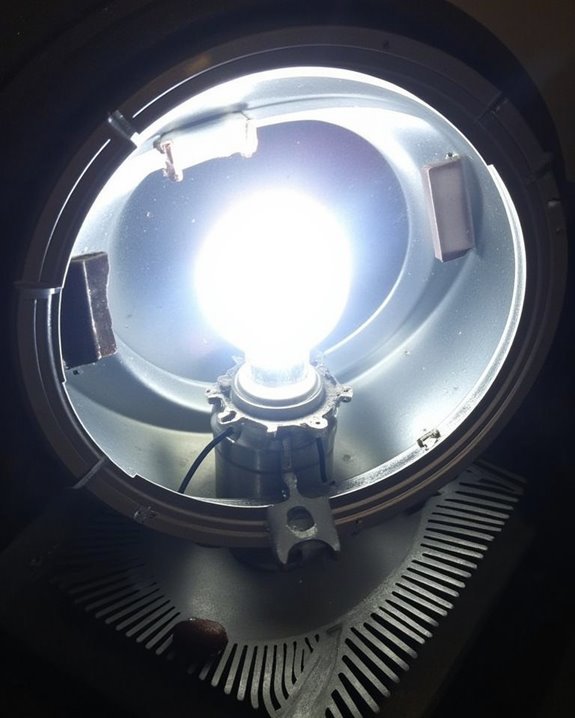
How Projector Lamps Work in Modern Projector TVs

When you look at projector TVs today, you’ll find that their lamps play a vital role in producing clear, vibrant images by generating intense light through advanced arc or solid-state technologies, such as mercury vapor bulbs, LEDs, or lasers, each with specific lifespans, efficiency levels, and color accuracy. Understanding the components and the science behind these systems helps you see why modern projector TVs are more reliable and energy-efficient than older models, yet the process doesn’t stop there.
Key Takeaways
- Projector lamps generate intense light by igniting an arc inside a mercury vapor-filled tube using a high-voltage electrical current.
- Reflectors and phosphor coatings shape and enhance the light, ensuring accurate color and brightness for image projection.
- The lamp’s housing protects against UV radiation, manages heat, and ensures safe, efficient operation within projector TVs.
- Modern projector TVs increasingly use LED and laser alternatives, which offer greater efficiency, longevity, and color accuracy than traditional lamps.
- Regular maintenance and monitoring of lamp lifespan are crucial, with replacements needed when dimming or flickering occurs.
Key Components and Types of Projector Lamps
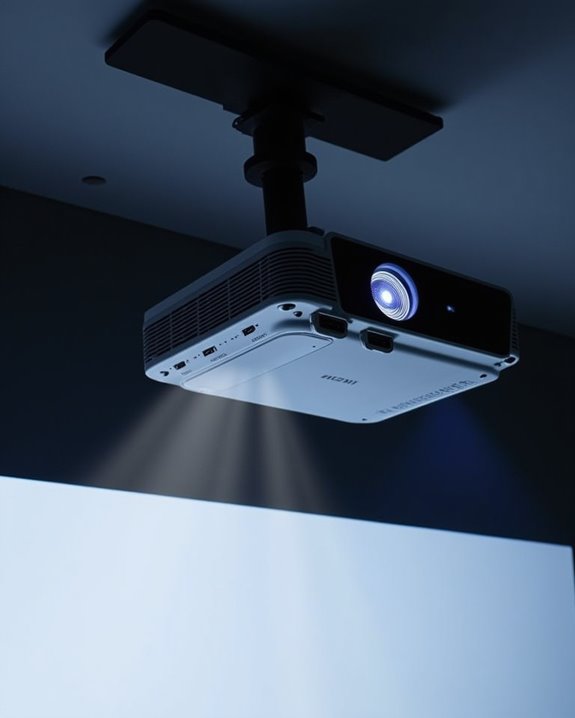
When you look at modern TVs that use projection technology, it’s important to understand the key components and different types of projector lamps, since these elements directly influence both image quality and longevity. The ARC tube, made from heat-resistant glass and filled with mercury vapor, is the core of light generation, while the quartz globe’s reflective coating boosts efficiency and color rendering. Electrical wiring fused inside the ARC tube creates a closed circuit, and the lamp housing protects against UV radiation and physical damage, also aiding in heat dissipation. You’ll find that ballasts regulate the power supply, preventing electrical surges and ensuring stable performance. Modern projectors often incorporate auto-focus and keystone correction features to optimize image alignment and clarity in use. Most projector lamps contain small amounts of mercury, so careful handling and proper disposal are crucial to minimize health and environmental risks. Projector lamps come in several types, including UHP, LED, hybrid, high-intensity, and high-pressure xenon, each offering unique advantages for brightness and color accuracy.
Recommended Products
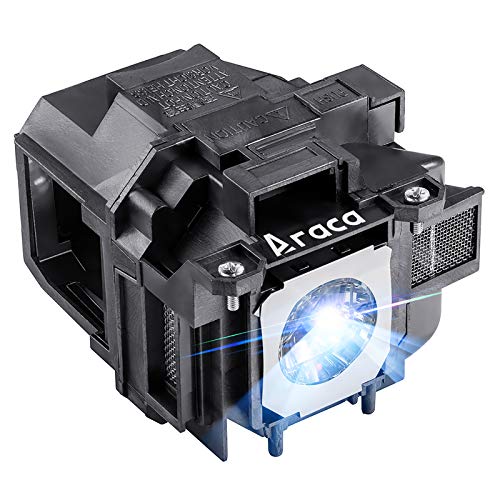
Compatible Models: for ELPLP88 /V13H010L88 with housing, fully tested before leaving the factory.

【Compatible models】for EP SON VS240 VS340 VS345 EB-945H EB-955WH EB-965H EB-S27 EB-U04 EB-U32 EB-W29 EB-X27 EB-X31 EX3240 EX7240 Pro EX9200 Pro HC1040 Home Cinema 1040 PowerLite 1224 PowerLite 1264 PowerLite 1284 PowerLite 955WH PowerLite 965H PowerLite 97H PowerLite 98H PowerLite 99WH PowerLite S27 PowerLite W29 PowerLite X27 Projectors.
Compatible Models: for ELPLP78 /V13H010L78 with housing, fully tested before leaving the factory.
The Science Behind Light Emission and Image Formation
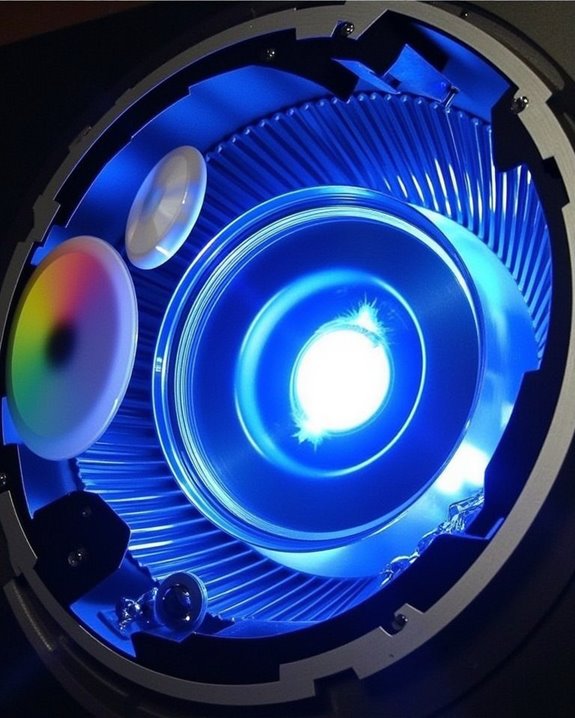
Although you might not see the complex process at work, the science behind light emission and image formation in modern projector TVs relies on a combination of electrical, optical, and digital systems working together. When you turn on a projector, high voltage from the ballast ignites an arc between electrodes within the lamp, ionizing gas to emit intense light. The arc’s stability is vital, as fluctuations can impact both brightness and the accuracy of the color spectrum produced. A reflector gathers and directs this light into the optical system, where technologies like LCD or DLP panels shape it into an image. Signal processing guarantees the correct image data reaches the projection system, while adjustable lenses focus and magnify the image, enhancing clarity and achieving precise image formation. Many projectors also incorporate high contrast ratios to ensure vivid and detailed images, even in varying lighting conditions. White light is produced in many projector lamps by using phosphor coatings that convert the intense blue or UV light from the arc into a broad spectrum, ensuring that projected images appear natural and vibrant.
Comparing Traditional Lamps With LED and Laser Alternatives
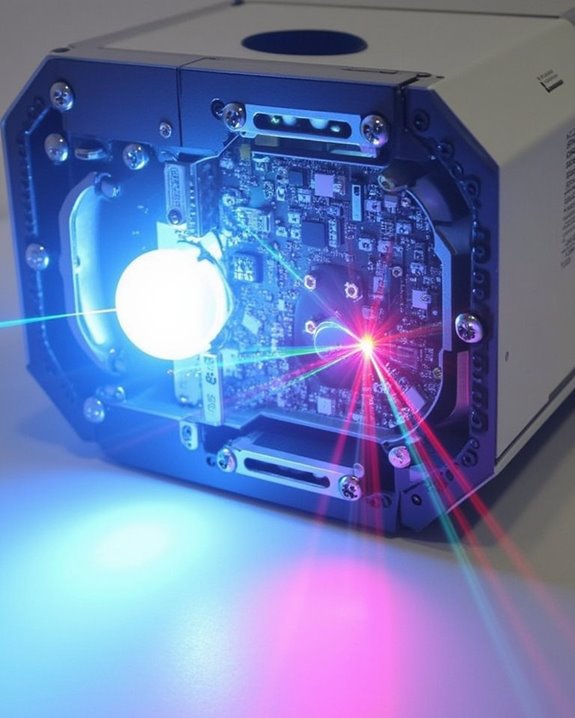
While projector technology has evolved rapidly, understanding the differences between traditional lamp-based projectors and newer LED or laser alternatives is essential for making informed choices. Traditional lamp projectors rely on high-intensity lamps, but these have lower energy efficiency and typically offer less color accuracy compared to modern options. LED projectors use light-emitting diodes, which provide higher color saturation and consume less power, making them attractive for home use and environmentally conscious settings. Many LED models also feature wrinkle-free projection surfaces, enhancing image clarity and durability. Laser projectors, meanwhile, deliver superior brightness—often exceeding 3,500 ANSI lumens—and consistently high color accuracy, meeting demanding standards like Rec. 2020. Both LED and laser projectors generate less heat and support a more sustainable approach due to their long lifespans and reduced energy consumption, making them preferable for most modern applications. Importantly, laser projectors do not use traditional lamps, instead relying on laser diodes that provide a significantly longer lifespan and more consistent performance over time.
Recommended Products

5-in-1 Dual Lens Galaxy Projector: Rossetta light projector combines an advanced dual-lens star projector, color-changing aurora lights, nebula light projector, Bluetooth speaker, and white noise sound machine. Its dual optical lenses project a vibrant cosmos of galaxy lights and magical northern lights with 58 mixed light effects onto your walls and ceiling, instantly transforming any room into a breathtaking personal planetarium for daily relaxation and a romantic ambiance
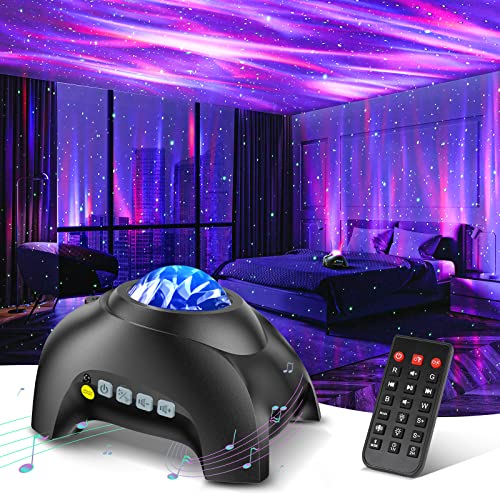
🏡【𝐔𝐩𝐠𝐫𝐚𝐝𝐞𝐝 𝟑-𝐢𝐧-𝟏 𝐆𝐚𝐥𝐚𝐱𝐲 𝐏𝐫𝐨𝐣𝐞𝐜𝐭𝐨𝐫】Watch the splendid aurora views without chasing around or hiking far away, turning your home into a mini planetarium room or cozy bedroom. Place yourself in a peaceful environment with natural white noises echoing in your ears, relaxing both your mind and body. Enjoy immersive sound while playing your favorite music through the built-in Bluetooth speaker and lamp-style ambient effect.
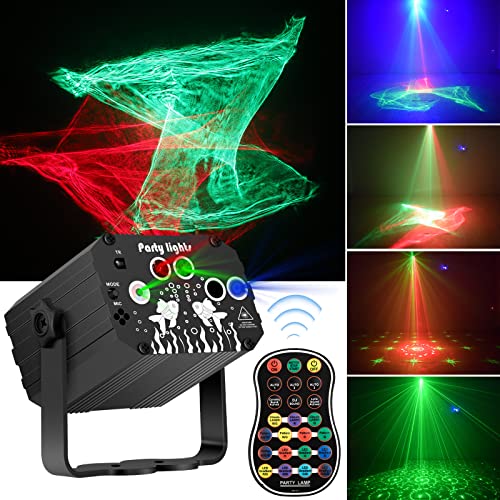
【Amazing Multi-effects】Upgraded 3-IN-1 Nebula & Laser & LED disco dance lights for parties, capable of producing 90 combinations of images, 7 color LED backgrounds (red, green, blue, red & green, red & blue, blue & green,red & blue & green) and 2 beam lazer combinations (green, red), creating a more wonderful stage flash atmosphere with multi-effect and high definition projection quality combination
Maintenance, Lifespan, and Cost Considerations
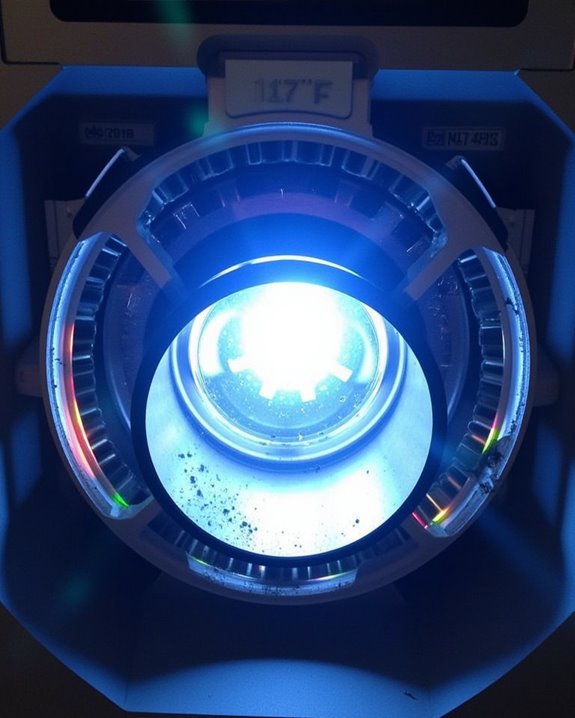
Because projector lamps play a critical role in image quality and device reliability, understanding how to maintain them, anticipate their lifespan, and plan for replacement costs is essential for any projector owner. Regular maintenance—such as cleaning the lamp and air filter with a soft, lint-free cloth or compressed air—prevents dust buildup, which helps avoid overheating and protects both lamp and sound quality. Most projector lamps last between 1,000 and 5,000 hours, but factors like dust, humidity, and poor ventilation can shorten this range. Switching to low power mode can significantly extend lamp lifespan, so it’s a practical step for owners looking to maximize their investment. Replacement costs vary widely, from $200 to $1,000 depending on lamp type, so extending lifespan through proper care is cost-effective and supports better battery longevity in integrated systems. Recognizing signs of wear, like dimming or flickering, signals when replacement is necessary.
Recommended Products
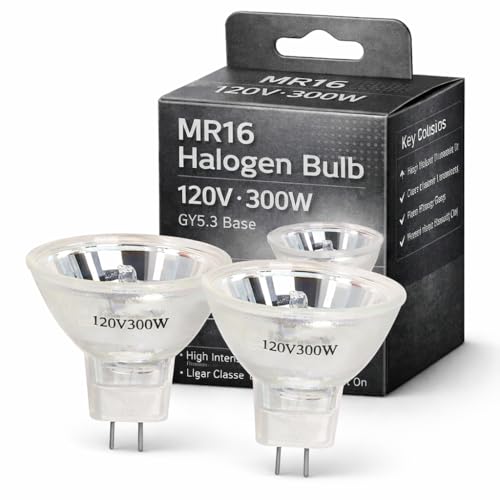
【Precision Compatibility】Compatible with Kodakk Carousel 760H, RC55, features MR16 blub with 2-flat GY5.3 base type. Perfect replacement for slide and film strip projectors, stage projectors, classroom AV systems, and professional presentation equipment

Product Contents: you will receive two projector lamps: one replacement and one spare, ideal for your daily needs
Trends Shaping the Future of Projector TV Technology
Maintaining your projector lamp is only one part of getting the most out of your TV, but the future of projector technology is being shaped by rapid advances in both hardware and smart features. Modern projectors now offer ultra-high-definition 4K and 8K resolutions, expanded color gamuts, and HDR support, delivering crisp images even with challenging ambient lighting. AI integration brings automatic adjustments based on your room’s brightness and projection surface, enabling ideal picture quality without manual calibration. Connectivity improvements let you control projectors through smart assistants and seamlessly integrate them with smart home audio and lighting systems. Innovations in form factor, like ultra-short-throw designs and rollable screens, provide flexibility for diverse living spaces, while advanced display materials enhance brightness, color purity, and contrast on any surface. At CES, ultra-short-throw projectors like the Hisense L9Q were showcased, highlighting how modern projectors can deliver extremely bright and high-quality images at sizes up to 150 inches, further illustrating these ongoing advancements.
Frequently Asked Questions
Can I Recycle Old Projector Lamps Safely?
Yes, you can recycle old projector lamps safely. Since they contain hazardous materials like mercury, use lamp recycling programs or hazardous waste centers. Don’t toss them in the trash—proper recycling protects your health and the environment.
Are Projector Lamps Interchangeable Between Different Projector Brands?
You’d think lamp compatibility would be simple, but brand interchangeability is almost a myth. Projector lamps are custom-fit for specific models, so you can’t just swap them between brands and expect flawless performance—or any at all.
Do Projector Lamps Contain Mercury or Other Hazardous Chemicals?
Yes, many projector lamps contain mercury, which is a hazardous chemical. You’ll want to handle them carefully and follow proper lamp disposal procedures to avoid health risks and environmental harm. Always check labels for hazardous chemicals.
How Do Ambient Room Conditions Affect Projector Lamp Performance?
Did you know excessive heat can reduce projector lamp lifespan by up to 50%? You’ll want to keep room temperature between 41°F and 95°F, maintain airflow, and limit ambient lighting for ideal projector lamp performance.
What Are Common Signs of a Failing Projector Lamp?
You’ll notice warning signs like dimming images, faded colors, flickering, or sudden shut-offs as your projector lamp nears the end of its bulb lifespan. Indicator lights and on-screen messages often alert you to replace it soon.