As an Amazon Associate, we earn from qualifying purchases. Some links on this site are affiliate links at no extra cost to you. Our recommendations are based on thorough research and editorial judgment.

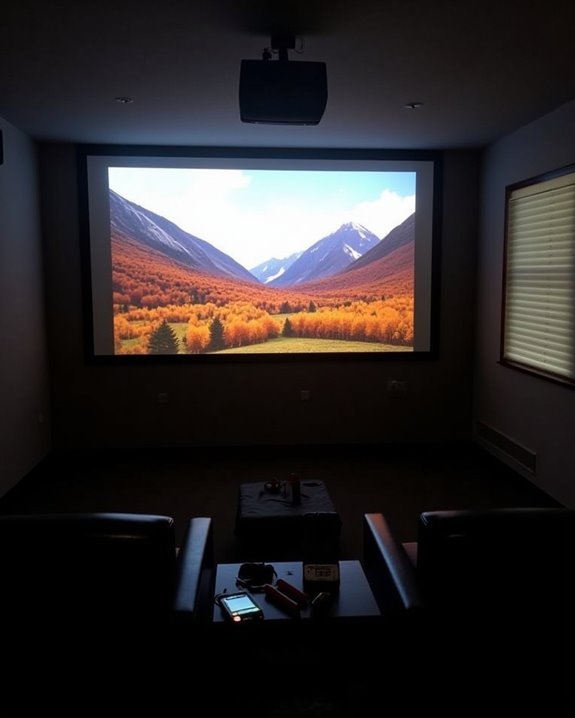
How Many Lumens Is Good for a Projector?

If you’re shopping for a projector, you’ll quickly discover that lumens—the measurement of brightness—is a critical specification that can make or break your viewing experience. The “right” brightness level isn’t universal; it depends on your specific environment, screen size, and intended use case. A projector that looks stunning in a dark home theater might appear washed out in a bright conference room, while an overly powerful projector can cause eye strain in intimate settings. Understanding how to match lumen ratings to your needs will ensure you don’t waste money on unnecessary brightness or end up with disappointing image quality.
Key Takeaways
- For dark home theaters, 1,000-2,500 lumens are sufficient for optimal viewing quality.
- Rooms with ambient light require 2,300-4,000 lumens to maintain vibrant images and clarity.
- Business presentations and classrooms typically need 2,500-5,000 lumens for clear visibility.
- Larger screens demand more lumens—approximately 80 lumens per square foot in dark rooms.
- Bright environments with windows or outdoor settings require at least 3,000 lumens for acceptable image quality.
Understanding Projector Lumens: What Do The Numbers Mean?
When you’re shopping for a projector, you’ll encounter the term “lumens” prominently displayed on product specifications, but you might not fully understand what these numbers actually represent. Simply put, lumens measure the total amount of visible light produced by your projector, with higher numbers indicating a brighter image that remains clear even in rooms with ambient lighting.
The most reliable projector lumen standards are ANSI lumens, which provide standardized brightness measurement techniques for accurate comparison between different models. Unlike other brightness units such as lux, nits, or foot-lamberts (which measure brightness per area), lumens quantify the projector’s total light output. For context, a standard 100-watt incandescent bulb emits approximately 1,600 lumens, which can help you visualize what different lumen ratings might mean for your viewing experience. For example, projectors with around 1100 ANSI lumens are suitable for use in moderately lit rooms to maintain image clarity.
Home Theater Projector Brightness Requirements
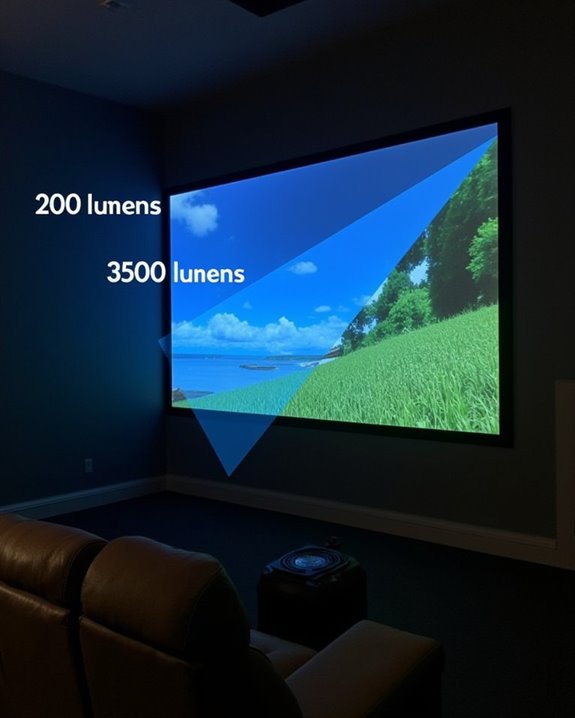
Since selecting the right brightness level dramatically impacts your home theater viewing experience, understanding lumen requirements is essential for ideal performance. For completely darkened rooms, 1,000-2,500 lumens typically suffices, with 1,500-2,000 lumens ideal for standard 100″-120″ screens while maintaining projector color accuracy. If your space has ambient light, you’ll need 2,300-4,000 lumens to overcome potential washout, ensuring images remain vibrant regardless of lighting conditions.
Screen size directly influences brightness needs, with larger screens requiring higher lumen outputs to maintain consistent illumination across the entire surface. Regular maintenance tips include cleaning the lens and air filters to preserve maximum brightness over time, as dust accumulation can diminish light output by up to 25%. Remember that ANSI lumens provide the most reliable measurement when comparing different projector options. For environments with significant ambient light, projectors with at least 5000 ANSI lumens are recommended to ensure vibrant colors and daylight visibility.
Recommended Products
![[Now with Netflix & 3600ANSI] 4K Smart Projector with WiFi and Bluetooth, Auto Focus & Keystone Mini Projector with Stand, Outdoor Home Theater Small Proyector for bedroom(white)](https://m.media-amazon.com/images/I/41lmX07taVL._SL500_.jpg)
[Smart Projector Now with Netflix – No Stick, No Lag]Tired of buying a "smart" projector only to find you still need a separate stick for Netflix? Not this one. VISSPL smart projector comes with Netflix, YouTube, and Prime Video pre-installed – power on and stream instantly. No extra dongles, no sideloading headaches. With 1.5GB RAM and lightweight Whale OS, app launches are 2x faster than sluggish sticks – zero stutter, zero buffering. OTA updates and Whale App Store let you download any app. No subscription traps, no hidden fees. Just a portable projector that delivers your favorite content instantly. This is the smart proyector that makes movie nights effortless.
[Built-in Streaming System - Without extra equipment ] - The smart projector has Google TV system built-in, giving you direct access to over 1,000 apps, including Netflix, Prime Video, YouTube, and Hulu. With plug-and-play convenience, it makes movie watching effortless and hassle-free.
Business and Classroom Projector Brightness Needs
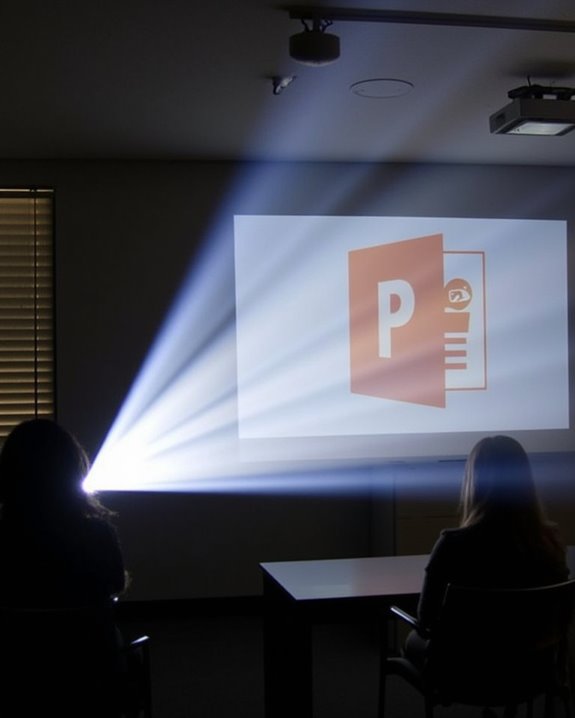
Business and classroom environments require substantially different projector brightness levels than home theaters, largely due to varying ambient light conditions and audience sizes. For business presentations, you’ll typically need 2500-5000 ANSI lumens in smaller conference rooms, while larger spaces may require 5000-10000 lumens for ideal visibility.
Classrooms generally need a minimum of 2500 ANSI lumens, with 3000-4000 being a cost-effective standard that balances brightness requirements with lamp lifespan considerations. When selecting a projector for these professional settings, assess your room’s ambient light conditions, particularly if windows are present. Color accuracy becomes especially important for detailed presentations with charts or graphics, as viewers need to distinguish between similar hues even under challenging lighting conditions. Remember that larger screens and audience sizes both necessitate higher lumen outputs. Additionally, projectors with high contrast ratios can significantly improve image clarity in well-lit environments.
Recommended Products

High Brightness DLP Lamp Projector: Deliver clear visuals for essential presentations with SVGA (800x600p) resolution and a 1.9-2.1 throw ratio; providing a dependable solution for basic classroom and office needs
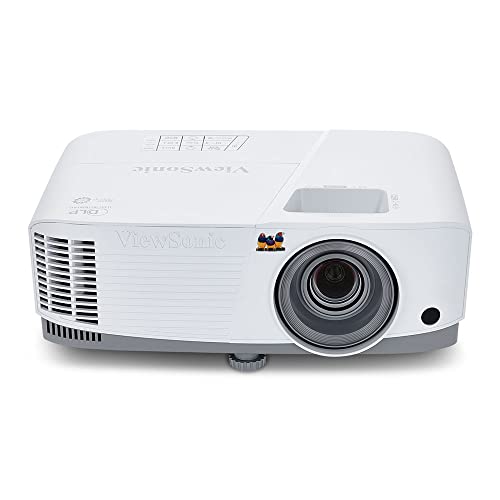
High Brightness DLP Lamp Projector: Deliver crisp text and vibrant images with WXGA (1280x800p) resolution and a 1.5-1.7 throw ratio; ideal for professional presentations and collaborative tasks in any workspace

High-Performance Full HD Projector: Deliver sharp, detailed visuals with native FHD (1920x1080p) resolution and a 1.4-1.6 throw ratio; providing professional-grade clarity for any space including offices and classrooms
How Ambient Light Affects Required Lumen Levels
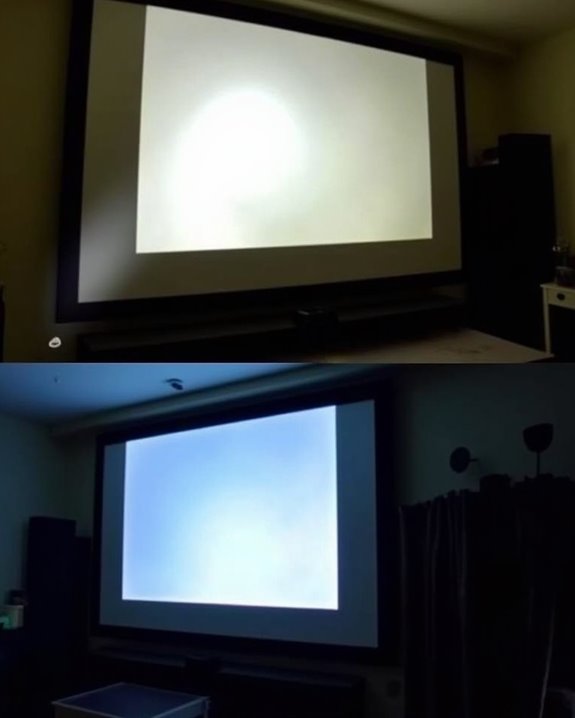
Ambient light stands as the most significant factor affecting your projector’s perceived brightness, directly determining how many lumens you’ll need for a clear, vibrant image. In completely dark rooms, you can achieve excellent color accuracy with just 1,000-1,200 lumens, while rooms with moderate lighting require around 2,000 lumens for the same quality.
When dealing with bright environments featuring windows or overhead lighting, you’ll need at least 3,000 lumens to maintain image visibility and color integrity. Your room’s physical characteristics, including wall color and window placement, further impact your lumen requirements, as lighter surfaces reflect more ambient light. Consider energy efficiency when selecting higher-lumen projectors, as they typically consume more power but become necessary when ambient light control isn’t possible through window treatments or room darkening methods.
Matching Screen Size to Projector Brightness
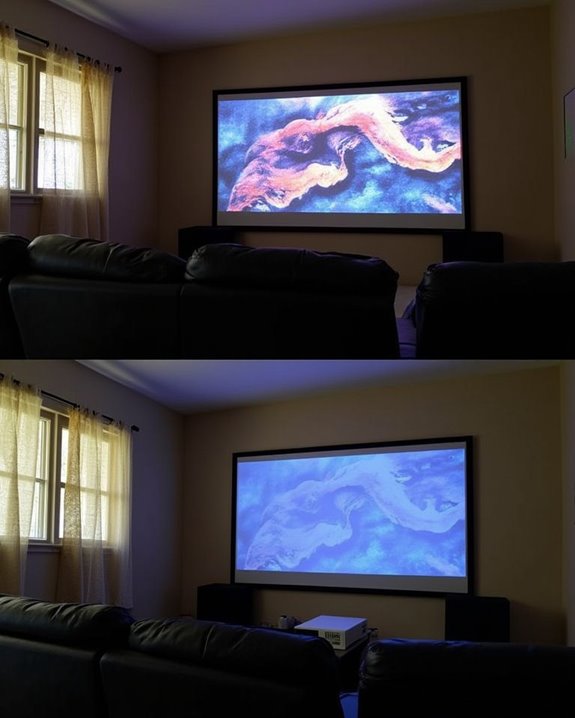
Properly matching your screen size to your projector’s brightness represents a critical balancing act that directly impacts image quality. For ideal viewing, you’ll need approximately 80 lumens per square foot in dark rooms, while environments with ambient light require at least 100 lumens per square foot.
When selecting a projector, consider that larger screens demand more brightness—a 150-inch screen needs considerably more lumens than a 100-inch screen to maintain clarity. Your screen material also influences brightness requirements, with high-gain materials reflecting more light but potentially compromising viewing angles. Projector placement affects performance too, as longer throw distances require increased brightness to compensate for light dispersion. For home theaters in controlled lighting, 1,500-2,000 lumens typically suffice for 100-120 inch screens, while business environments need 3,000+ lumens for comparable sizes.
Recommended Products

UPGRADE VERSION Unlimited Streaming –Compatible with Netflix & Dolby Audio& DTS Audio: The Kogata GC357 home projector comes with Netflix, YouTube, and support Prime Video apps pre-installed, along with over 200 additional apps available for download. No need for extra TV sticks—access exclusive programs you can’t find in the app store and stream directly through the 4k projector’s browser. Enjoy Dolby and DTS-certified audio for crisp, clear sound that brings music, instrumentals, and every note of the concert to life as if it's playing right beside you. Whether it's movie night or gaming, the immersive sound elevates the entire experience.

High Brightness FHD Laser Projector: Experience sharp visuals with native 1080p (1920x1080p) resolution and a 1.1-1.5 throw ratio; providing consistent clarity for professional-grade presentations and high-definition video content

[Stream Without Limits - Built-in APPs, Compatible with Netflix] The ONO3Pro 2.0 outdoor projector brings the world’s top streaming platforms to your fingertips—no extra devices needed. Compatible with Netflix, YouTube, Prime Video, Apple TV, Disney+, Live TV, and over 1.2 million videos in stunning clarity. With regular updates, your movie projector stays ahead with the latest features, enhanced security, and uninterrupted stability—so your entertainment is always fresh, legal, and buffer-free, wherever you go
Outdoor Projection: Finding The Right Brightness
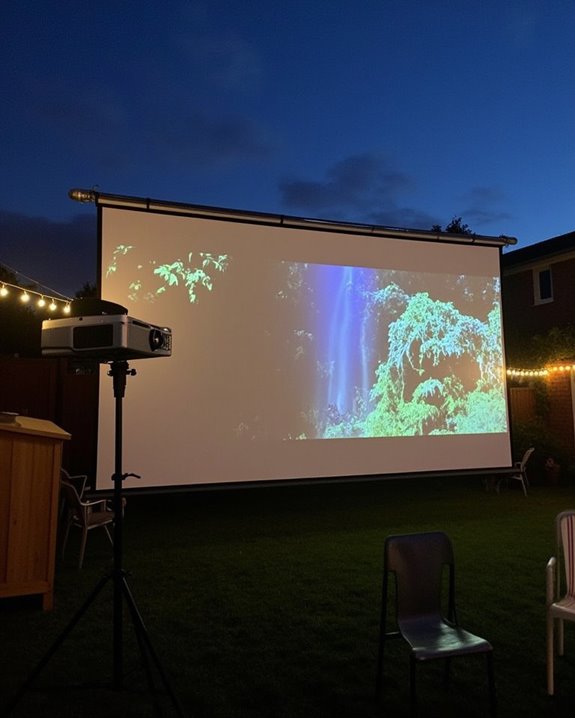
Outdoor projection presents unique challenges that demand markedly higher brightness levels than indoor environments, primarily due to competing ambient light sources. For daytime viewing, you’ll need at least 2500 ANSI lumens, while nighttime events may function with 1500-2000 lumens depending on ambient lighting conditions.
When selecting your outdoor projector, balance brightness requirements with power consumption, as higher-lumen models typically draw more electricity. Screen size considerably impacts brightness needs—larger screens require more lumens to maintain visibility across the entire surface. Consider investing in high-quality screens with reflective coatings that enhance brightness while preserving color accuracy. Environmental factors like shade, time of day, and surrounding light sources will affect your projection quality, so aim for a higher contrast ratio (minimum 2000:1) to ensure vivid images even in challenging conditions.
Recommended Products
![[Officially-Licensed APP & 2500 ANSI] Mini Projector with WiFi and Bluetooth, VOPLLS Smart Portable Outdoor Projector 4K Support with TOF Real-Time Focus, Native 1080P Movie Projector](https://m.media-amazon.com/images/I/41RK-Ft6h-L._SL500_.jpg)
[Smart Projector with Officially-Licensed APP– Stream Anywhere] - Compatible with Netflix, this mini projector comes with built-in streaming apps for the ultimate convenience. Whether you’re enjoying a cozy night in bed or camping under the stars, just a tap lets you watch thousands of movies and shows from Netflix, Prime Video, YouTube, and more. With smooth playback, vivid color, and stable performance, the video projector brings the cinema experience anywhere, anytime.

[2500 ANSI Daylight 4K Home Theater Projector] Enjoy bright, vivid picture quality with 2500 ANSI lumens, AI-powered image enhancement, and a premium high-transmittance optical system. This 4K projector with high lumens delivers rich color, crisp subtitles, and sharp edge-to-edge detail, making it an ideal daylight projector for living rooms, home theaters, movies, sports, and everyday viewing. Even with ambient light, images remain clear and immersive for a more comfortable TV-like viewing experience

[ Netflix Ready - No Extra Devices Needed ] – VISSPL Smart Projector: No TV stick, no casting, no complicated setup—just press play. Our device is fully compatible with top platforms including Netflix, YouTube, Prime Video, and more, fully integrated into the global streaming ecosystem. The 4K projector features AI-driven algorithms and a next-generation processing chip that ensures smooth, stable, and highly secure performance. Its built-in library of popular streaming apps, so you can effortlessly enjoy movies, shows, and more. Whether at home or outdoors, you can seamlessly switch between movies, games, and music for a fully personalized entertainment experience, anytime and anywhere.
Common Mistakes When Choosing Projector Brightness
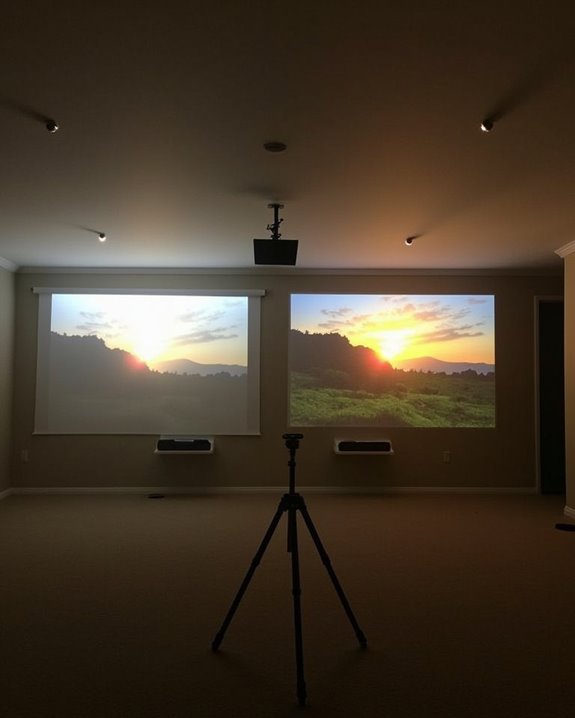
While outdoor projection requires careful brightness calculations, selecting the right lumen rating for any environment involves avoiding several common pitfalls that can lead to disappointing results. Many buyers fixate solely on resolution while neglecting brightness, resulting in washed-out images in well-lit rooms. You’ll also want to avoid misinterpreting manufacturers’ brightness claims, as some inflate lumen ratings or fail to distinguish between color and white brightness.
Another mistake is overlooking how brightness affects energy efficiency, with higher-lumen projectors typically consuming more power. When portability features are important, remember that ultra-bright projectors tend to be larger and heavier. Additionally, many consumers fail to contemplate the relationship between brightness and contrast ratio, both of which substantially impact image quality in different viewing conditions.
Special Venue Considerations for High-Lumen Projectors
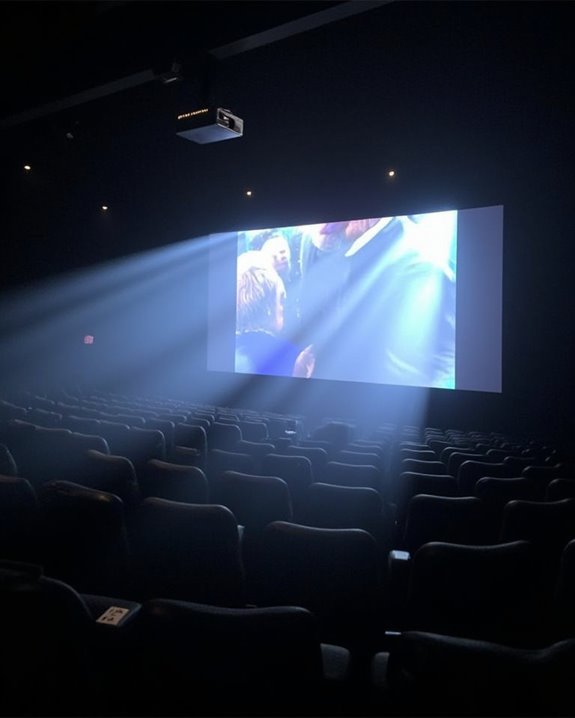
Large venue projections demand exceptional brightness capabilities that go far beyond standard home theater requirements, with specialized high-lumen projectors designed to overcome the unique challenges these environments present. When selecting projectors for auditoriums or conference halls, you’ll need to account for venue acoustics and projection angle to guarantee ideal performance. Christie models delivering up to 50,000 lumens can effectively combat high ambient light, while laser light sources provide up to 20,000 hours of maintenance-free operation. Consider projectors with 360° installation flexibility and motorized adjustments for precise positioning in challenging spaces. The throw distance directly impacts your placement options, and selecting models with interchangeable lenses accommodates various venue configurations. DLP or 3LCD technology with native 4K resolution will deliver the clarity and definition required for professional presentations.
Recommended Products

Premium 4K UHD Laser Projector: Experience high-fidelity 4K UHD (3840x2160p) resolution powered by 5,500 ANSI lumens; providing incredible brightness and clarity for large-scale home theaters and expansive entertainment venues
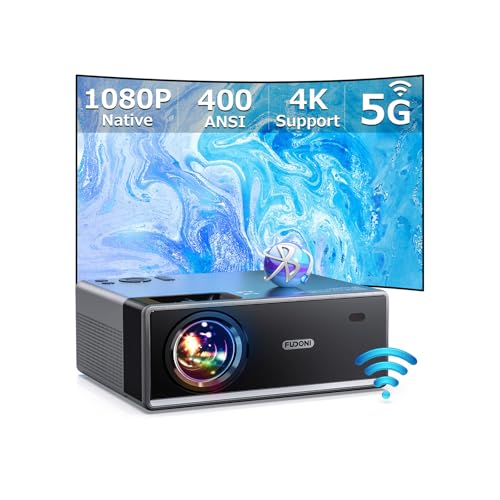
【400 ANSI HIGH BRIGHT IMAGE PROJECTOR】With a 1920 x 1080 resolution and a true brightness of up to 400 ANSI, this outdoor native 1080P projector can present you with clear and sharp full HD picture quality. This projector with high lumens can improve the resistance to ambient light and offers a brighter image. This movie projector with a 10000:1 contrast ratio has great color accuracy, allows for more realistic color reproduction, and highlights darker details.

High-Brightness WUXGA Laser Performance: Deliver crisp, high-resolution visuals with native WUXGA (1920x1200p) resolution powered by 6,000 ANSI lumens ; providing incredible brightness and clarity for large-scale professional venues
Balancing Brightness With Image Quality and Performance
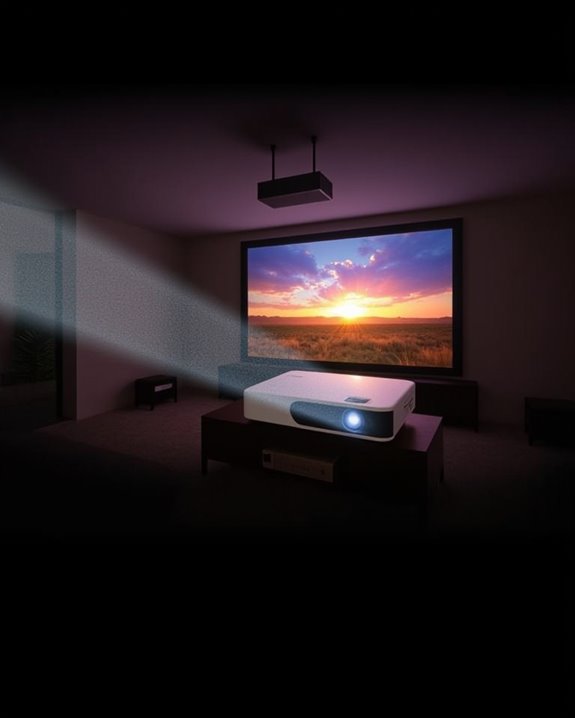
Achieving the perfect balance between brightness and image quality represents one of the most critical decisions you’ll face when selecting a projector for your specific needs. While higher lumens generally improve visibility in bright environments, they don’t automatically guarantee better overall performance.
Color accuracy suffers when brightness overwhelms other specifications, so you’ll want to consider both white and color brightness ratings. Modern projectors with advanced technology offer improved energy efficiency, allowing for brighter images without excessive power consumption. When evaluating options, remember that resolution, contrast ratio, and screen material interact with brightness to determine final image quality. ANSI lumen measurements provide standardized brightness comparisons, while manufacturer-specific ratings may vary considerably. The ideal projector balances sufficient brightness for your environment with the display quality necessary for your content type.
Frequently Asked Questions
How Does Projector Brightness Affect Lamp Life and Power Consumption?
Higher projector brightness reduces lamp longevity and increases power consumption. You’ll find that lower brightness settings improve energy efficiency and extend bulb life, while eco-modes help balance performance with operational costs.
Can Projector Lumens Be Adjusted or Dimmed After Purchase?
You can dim your projector’s brightness through settings but can’t increase its maximum lumens after purchase. Lamp adjustment options include eco-mode and brightness dimming controls, which also extend lamp life and reduce power consumption.
Do Different Projection Technologies Require Different Lumen Levels?
Like David battling Goliath, different projection technologies do have varying lumen standards. Your DLP projector needs more lumens than LCD or LCoS for equal brightness, while laser projectors maintain their brightness longer than lamp-based ones.
How Do Projector Lumens Compare to TV Brightness Measurements?
Projectors use lumens (light output) while TVs use nits (light intensity). You’ll need more lumens for larger screen sizes. Ambient light affects projectors more markedly, as they rely on reflected light, unlike TVs’ direct emission.
Are There Health Concerns With High-Lumen Projectors?
High-lumen projectors can cause eye strain and trigger skin sensitivity. You’ll experience discomfort during prolonged viewing, especially in dark rooms. You’ll need proper distance and brightness adjustments to protect your eyes and skin.