As an Amazon Associate, we earn from qualifying purchases. Some links on this site are affiliate links at no extra cost to you. Our recommendations are based on thorough research and editorial judgment.

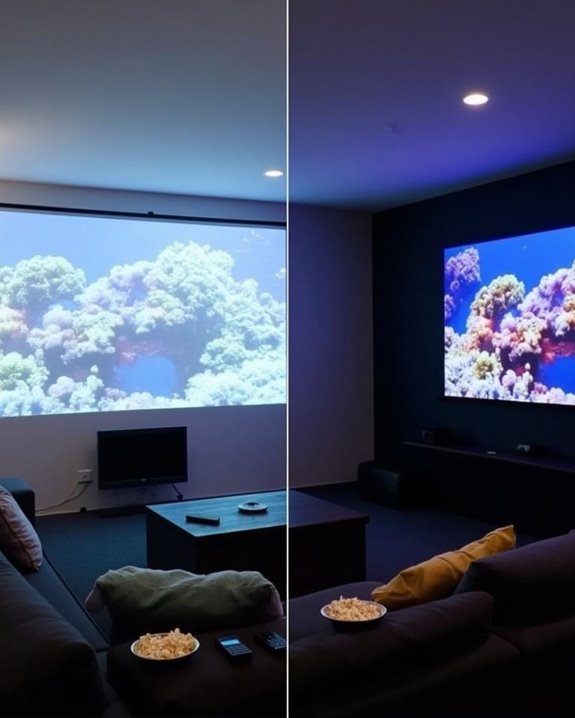
Are Projectors Better Than TVs for Home Entertainment?

Have you ever wondered if that giant screen experience at home is worth trading your trusty TV for a projector? You’re facing a choice that impacts not just your viewing experience, but your room setup and budget too. Projectors offer cinema-like immersion with screens reaching 100+ inches at price points where comparable TVs remain unattainable, while modern TVs deliver brightness and clarity that many projectors struggle to match in well-lit rooms. The answer depends on your specific priorities, living space, and how you’ll use your entertainment system.
Key Takeaways
- Projectors offer much larger screen sizes (100+ inches) than most TVs, creating a more immersive, cinema-like viewing experience.
- TVs perform better in bright environments, while projectors typically require controlled lighting for optimal image quality.
- Projectors provide better value per inch for large screens, costing significantly less than TVs of comparable size.
- Projectors offer greater placement flexibility and can disappear when not in use, preserving room aesthetics.
- TVs generally deliver superior brightness, color accuracy, and consistent image quality without requiring additional setup components.
The Battle for Screen Size: How Immersion Affects Viewing Experience
When it comes to creating a truly immersive home entertainment setup, screen size isn’t just a number—it’s the foundation of your entire viewing experience. Projectors offer a significant advantage here, capable of displaying images exceeding 100 inches diagonally, dimensions that most consumer TVs simply can’t match affordably. This size difference dramatically impacts immersion level, as larger screens create an enveloping field of view that more closely mimics a cinema experience.
You’ll find that as screen size increases, your emotional engagement with films and games intensifies. While TVs typically max out around 85-100 inches for mainstream models, projectors break these limitations, transforming your viewing from simply watching content to feeling surrounded by it. The resulting theater-like experience represents one of the projector’s most compelling advantages over traditional televisions. Additionally, many modern living room projectors support HDR10 technology, enhancing color accuracy and contrast to further elevate the visual experience.
Brightness Matters: Performance in Different Lighting Conditions
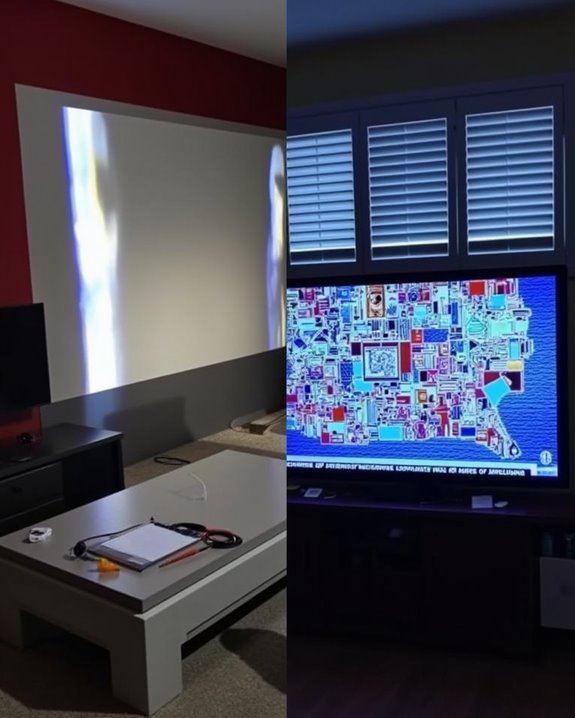
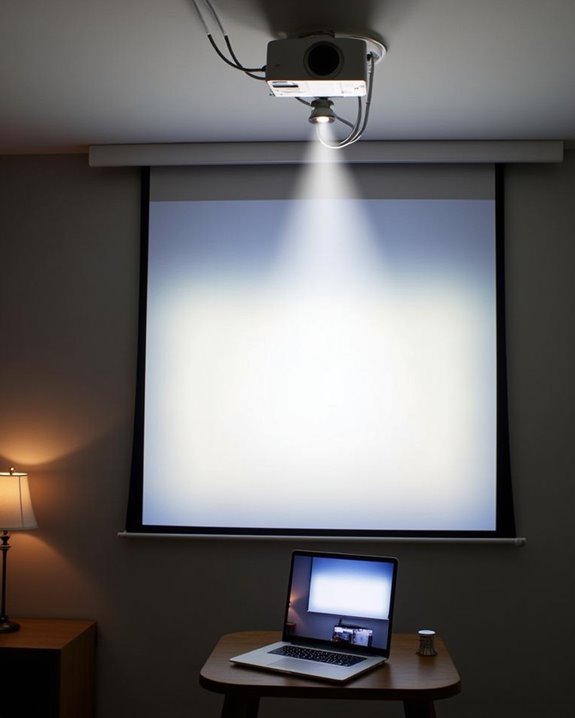
Although projectors excel at creating cinema-sized displays, they’re fundamentally outmatched by TVs when it comes to brightness capabilities, a factor that substantially impacts viewing quality across different environments. TVs deliver superior luminance levels and can effectively reject ambient lighting, maintaining vibrant colors and sharp contrast even in well-lit rooms.
When you’re watching content during daytime or in bright settings, you’ll notice projectors often produce washed-out images with compromised dark scenes. While high-lumen projectors paired with specialized screen technology can improve performance, they rarely match a TV’s ability to maintain color accuracy in challenging lighting conditions. The difference becomes particularly noticeable with HDR content, where TVs leverage their higher peak brightness to deliver more dynamic range and deeper blacks than most consumer projectors can achieve. Many projector models feature adjustable brightness levels that help optimize visibility in various lighting conditions but still fall short of TVs in bright environments.
Recommended Products

HI-QLED COLOR: Experience a visual treat with Hi-QLED Color. Every frame is rich, vibrant, and true-to-life, ensuring that every shade, from soft pastels to bold and striking tones, stands out in stunning clarity

TCL QM6K QD-MINI LED TV SERIES - AFFORDABLE PREMIUM PERFORMANCE FOR SPORTS, GAMING & STREAMING. Experience superior contrast, rich color, and ultra-smooth motion with TCL’s QD-Mini LED technology. Designed to outperform traditional QLED and OLED TVs, the QM6K is the best TV for every moment—whether you're streaming, gaming, or watching the big game.

Breathtaking picture: Sharp 4K brings out rich detail on our 55" flat screen TV, while the QLED screen and HDR10 create bright, accurate colors. Roku Smart Picture cleans up incoming TV signals, optimizes them, and chooses the right picture mode.
Budget Breakdown: Comparing Value Per Screen Inch
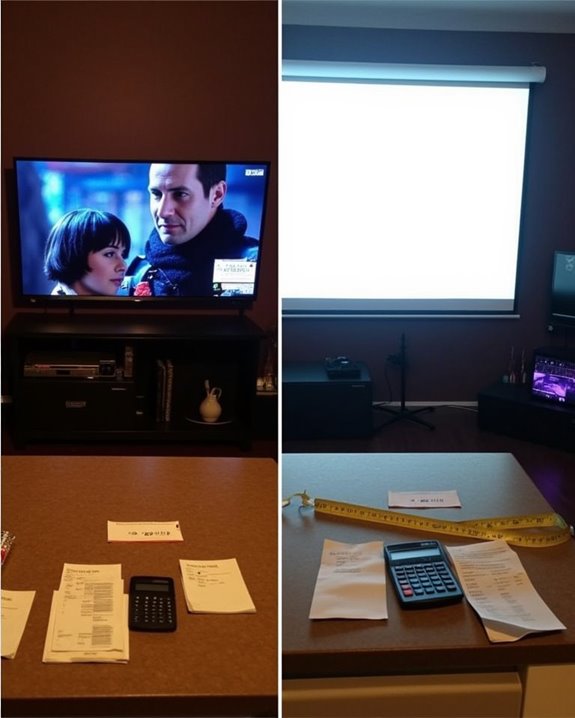
The brightness limitations of projectors fade into the background when you’re looking at the sheer economics of large-format viewing. When calculating cost per screen inch, projectors consistently outperform TVs beyond the 75-inch threshold, where television prices rise dramatically. For approximately $1,000, you can acquire a budget 4K projector delivering a 100-inch or larger display, compared to similarly priced TVs offering just 55-65 inches.
While proper screen calibration adds to your initial investment, the value proposition remains compelling even after factoring in a dedicated screen and audio integration solutions. TVs arrive as all-in-one units with built-in sound, but projector setups, despite requiring additional components, still provide substantially better value for immersive viewing experiences. The economic advantage becomes particularly evident when considering that large OLED TVs can cost several times more than equivalent-sized projector displays. Additionally, projectors with 5000 ANSI lumens brightness are capable of delivering vibrant images in well-lit rooms, making them practical for everyday home entertainment.
Recommended Products

[ Built-in Official Licensed Google TV ] - Without additional equipment, the smart projector can directly access Netflix, Prime Video, YouTube, Hulu, and other applications. It greatly reduces the complexity of operation and makes watching movies more convenient
![[Officially-Licensed App & Auto Focus]White Smart Mini Projector with WiFi and Bluetooth, XuanPad 4K Support Movie Projector, Portable Native 1080P Outdoor Projector with 360° Stand](https://m.media-amazon.com/images/I/51I8uy-U8bL._SL500_.jpg)
Exciting Moments Begin - The XuanPad mini projector compatible with Netflix for the ultimate viewing experience.No extra devices or complicated setup needed—just enjoy instant access to a vast library of movies with immersive, smart TV-like quality.XuanPad smart projectors are compatible with a variety of built-in apps like YouTube and Prime Video, and support for wireless screen mirroring and HDMI. Whether it's movie night, a gaming session, or camping, our licensed projectors can meet your customized entertainment needs.
![Outdoor-Projector-4K [VIDAA Live TV/40W Dolby/920 ISO] with WiFi6 and Bluetooth Compatible with Netflix, Smart Projector, AI Voice Control & Auto Focus, HDR10, Movie Proyector for Ceiling Home Theater](https://m.media-amazon.com/images/I/51R8227Xr5L._SL500_.jpg)
【2026 No.1 Fast VIDAA OS | Cloud Storage & Data Security】The upgraded X9 PRO 4k projector builds on the classic X9 proyector with superior speakers, higher brightness, and the exclusive VIDAA OS—designed to feel like a smart TV but perform even smoother. Unlike standard Android or Google TV projectors, VIDAA stays fast and stable over months of heavy use, with zero lag. It includes cloud storage to keep local memory free, and no data tracking, no targeted ads, and no personal collection. Kids mode with enhanced privacy protection. Whether at home, camping, or watching live sports, you get a secure, distraction‑free cinema experience every time
Versatility and Placement: Finding the Perfect Spot
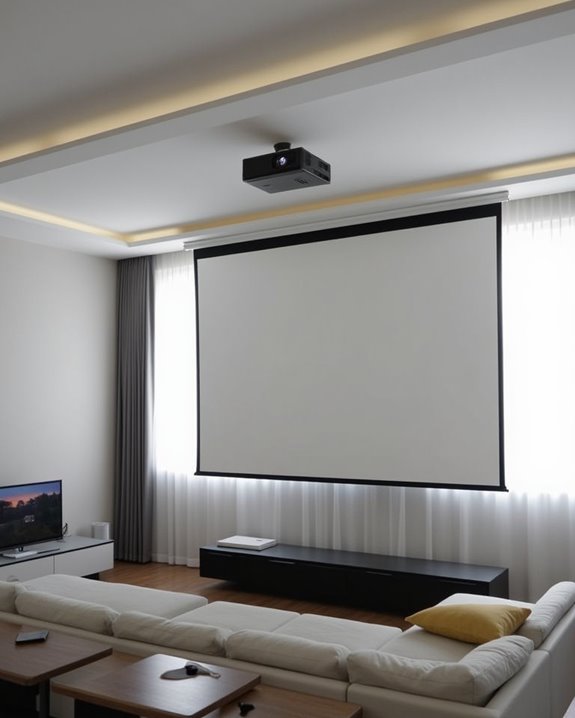
Finding your ideal projector placement dramatically transforms how you’ll experience home entertainment compared to traditional TV setups. Unlike TVs that require dedicated wall space, projectors offer flexibility to utilize any room surface, though wall compatibility depends on color and texture for *best* image quality. You’ll need to *think about* lighting requirements carefully, as projectors perform best in dark or dimly lit environments while TVs handle bright rooms effectively.
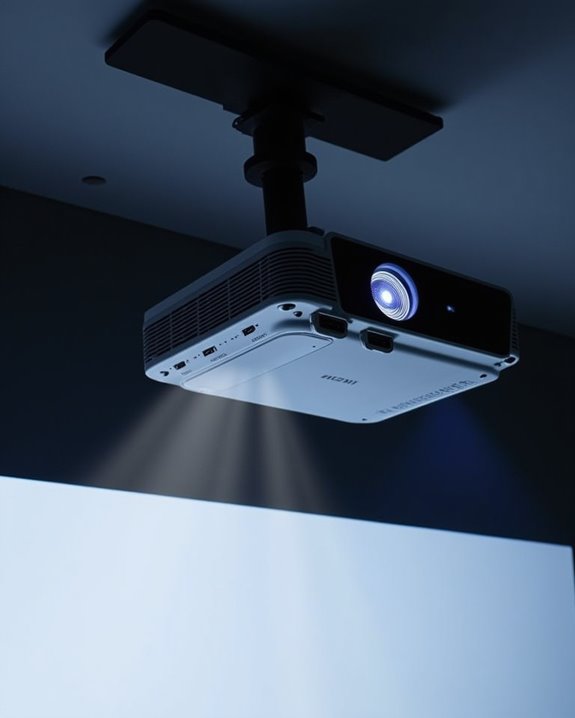
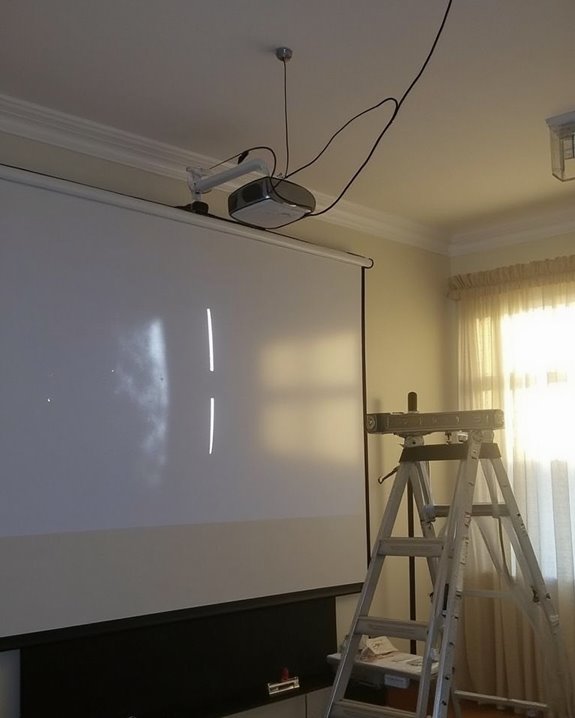
Ceiling mounts keep projectors out of the way, creating a cleaner aesthetic and reducing clutter in multi-functional spaces. For maximum versatility, portable projectors allow you to transform bedrooms, living rooms, and even outdoor areas into temporary theaters. This adaptability makes projectors particularly valuable for small apartments or spaces serving multiple purposes, where permanent TV installations might limit room functionality.
Recommended Products
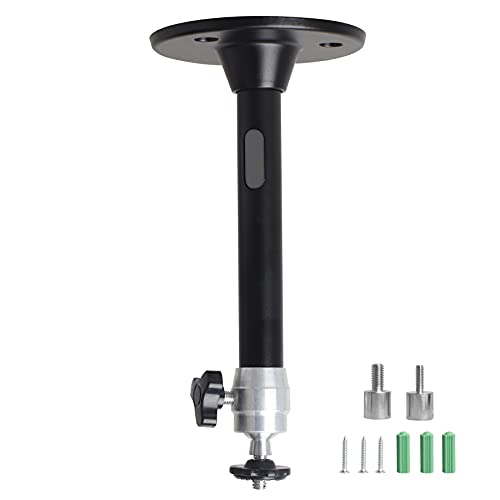
Projector Holder Compatible with QKK,DR.J,DBPOWER,Anker,VANKYO,AAXA,Jinhoo,PVO,TMY,AuKing and Most Other Mini Projector

1. EXTENDABLE LENGTH - Projector mount has a wider extending length from 14-24 in / 37-62 cm. Just adjust and fix a nice position for your projection to enjoy using a projector to watch football matches, movies, and shows .

Versatile Application: PUTORSEN projector ceiling mount is compatible with most manual or spectrum projector screens, Also can be used to hold a video camera, laptop, or other electronic device. The metal 13.77” x 8.66” tray holds up to 22 lbs of weight
Image Quality Face-Off: Resolution and Color Accuracy
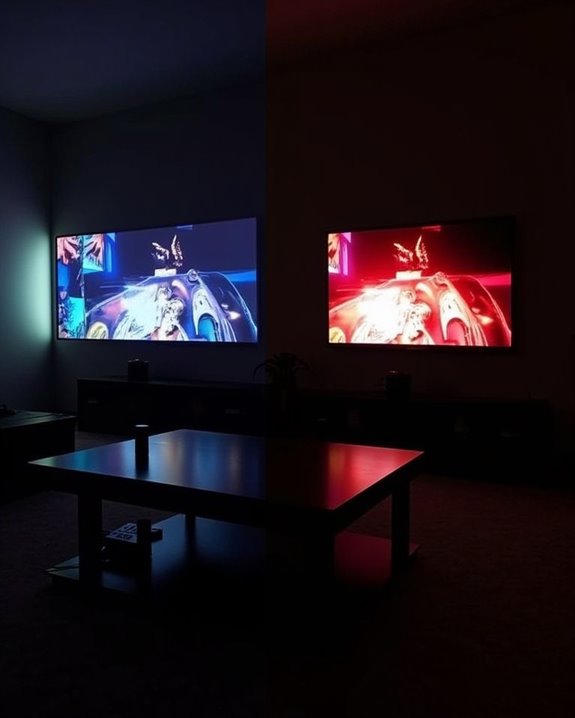
While projector placement gives you flexibility in how you arrange your entertainment space, image quality determines what you’ll actually see on screen. When comparing resolution, TVs maintain consistent sharpness regardless of size, while projectors may lose clarity on larger screens despite offering up to 4K resolution.
Color accuracy presents another notable difference, with TVs—especially OLED models—delivering more vibrant and accurate colors. Image calibration options exist for some projectors, but they rarely match a TV’s native color consistency across different lighting conditions. TVs also provide superior brightness and pixel density, allowing them to perform well even in well-lit rooms. Projectors, by contrast, require darker environments to achieve ideal image quality. Your viewing environment should heavily influence your decision, as ambient light considerably impacts a projector’s performance.
Setup Complexity: What You Need Beyond the Main Device
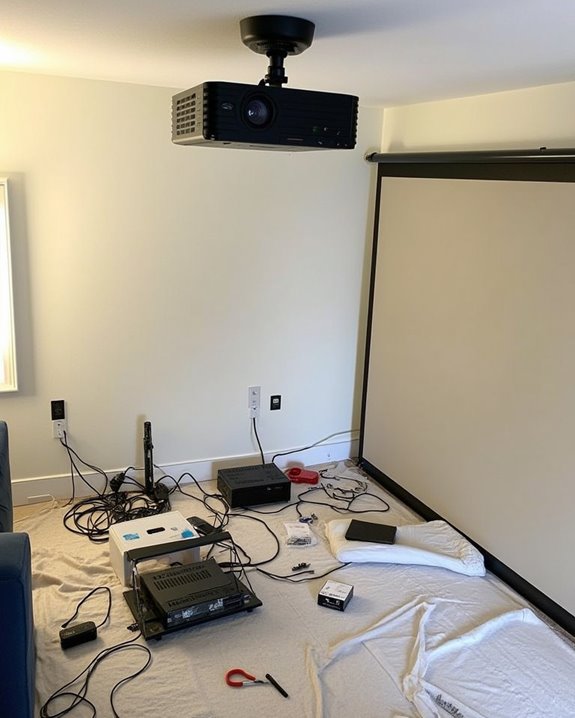
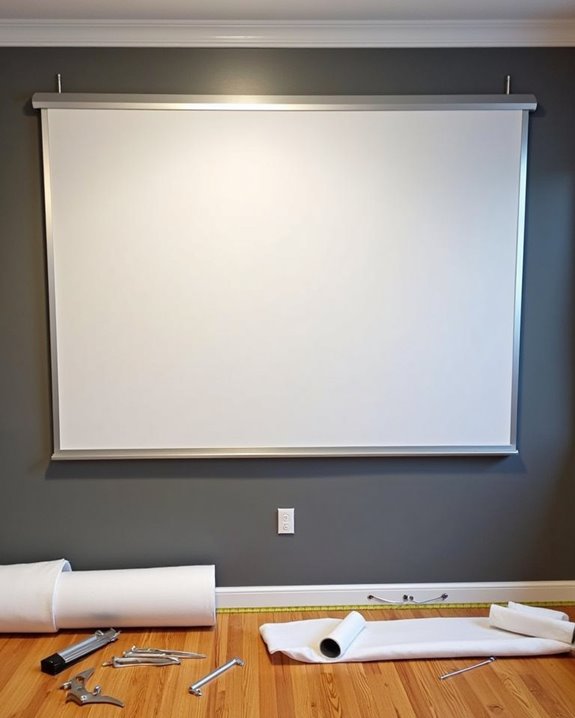
When purchasing a projector or TV, you’ll quickly discover that the main device represents just one piece of a larger entertainment puzzle that requires careful planning. Projectors present unique setup challenges, requiring screens or prepared wall surfaces, mounting hardware, and often a separate sound system for complete immersion. Wiring complexities increase with projectors, as you’ll need longer cables to accommodate flexible positioning and proper cable management.
Room preparation becomes essential with projectors, which perform best in darkened environments with blackout curtains or dimmable lighting. TVs generally offer simpler installation with fewer additional components required, though both systems benefit from thoughtful connectivity planning. Your space constraints will greatly impact your choice, as projectors need adequate throw distance and unobstructed wall space to deliver their full potential.
Recommended Products

Application: Fits most manual or spectrum projector screen on the market. Support maximum loading weight up to 66lbs / 30kg

UNIVERSAL: Compatible with most manual or spectrum projector screen on the market. Suitable for wood stud, concrete wall, brick wall and drywall

UNIVERSAL L-SHAPED PROJECTION SCREEN BRACKETS: Our projector screen wall mount makes setting up for your next movie or presentation a breeze. Most projector screens do not come with mounting hardware. Our screen mounting brackets are what you need to your hang your screen. Universal hooks are compatible with most hanging projector screens on the market.
Long-Term Considerations: Maintenance and Lifespan
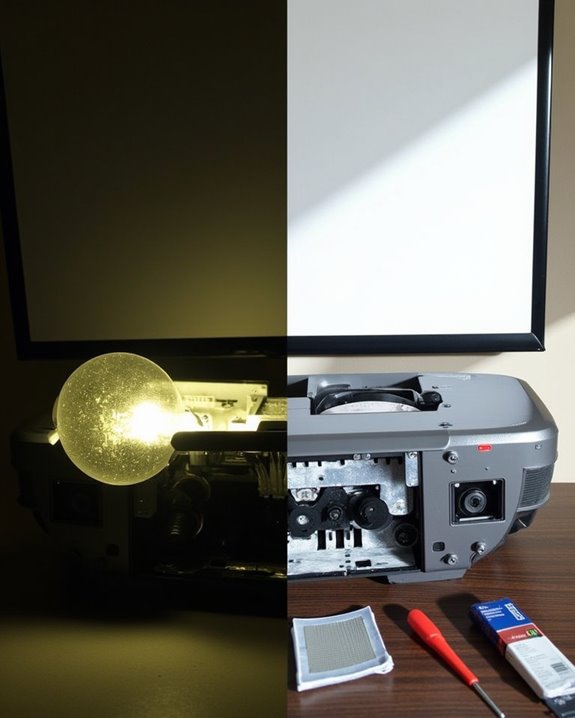
Beyond setup concerns, you’ll need to think about the ongoing commitment each technology demands. Projectors require periodic lamp replacements and regular filter cleaning to maintain ideal performance, though newer LED and laser models offer improved energy efficiency with lifespans reaching 20,000-30,000 hours. TVs generally demand less maintenance with no lamp replacements and greater durability against environmental factors like ambient light and dust.
When considering technological upgrades, TVs typically need only software updates, while projectors might require component replacements. However, projectors offer health benefits by reducing eye strain and blue light exposure. Environmental conditions considerably impact projector performance—they’re sensitive to room lighting, humidity, and dust—whereas TVs maintain consistent image quality regardless of surroundings, making them more adaptable for various home settings.
Recommended Products
![[2026 Upgraded] Mini Projector 4K Supported, Built-in App, Android TV OS X1](https://m.media-amazon.com/images/I/51s19xfy77L._SL500_.jpg)
【Android 14 TV OS & 1,000+ Built-In Apps】 Powered by Android 14 TV OS and the upgraded H726 chip, the X1 delivers fast, stable performance for everyday streaming. Access 1,000+ popular apps, including Netflix, YouTube, Prime Video, Tubi and Disney+, directly from the projector without an additional TV stick.
![Smart Projector 4K [VIDAA Live TV & 36W Dolby & Voice Control] with WiFi6 and Bluetooth, Short Throw Projector Compatible with Netflix, AI Auto Focus, HDR10, Home Theater Proyector for Outdoor Movies](https://m.media-amazon.com/images/I/51LPK2IYH0L._SL500_.jpg)
[2026 Fastest VIDAA Smart OS: Faster, Smoother, More Reliable] TOPTRO A2 4K projector runs exclusive VIDAA Smart OS, blending smart-TV simplicity with a mature app ecosystem and broad streaming support. Built on years of smart TV development, it delivers a true TV-like experience with smooth, intuitive operation. Compared with standard Android or Google TV projectors, VIDAA offers faster navigation, greater stability, enhanced security, and more efficient resource management. No streaming stick needed. Access Netflix, YouTube, Prime Video, Disney+, Hulu, and massive live TV channels. Designed for long-term performance, VIDAA stays responsive while reducing ads, crashes, and complicated setup
Room Design Impact: How Your Entertainment Choice Shapes Your Space
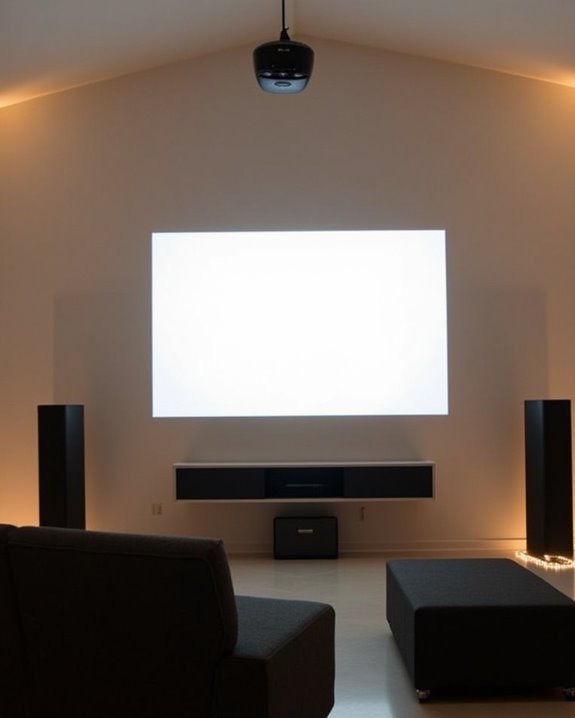
Choosing between a projector and a TV doesn’t just affect your viewing experience; it fundamentally shapes how you’ll design and use your entertainment space. Projectors offer superior flexibility, allowing you to incorporate decorative accents throughout the room without a large screen dominating your wall. With minimal space requirements, projectors enable more creative layouts and can disappear when not in use, maintaining your room’s aesthetic integrity.
TVs, while more permanent fixtures, offer easier wall integration and perform consistently regardless of ambient lighting. Your room’s natural light conditions should heavily influence your decision—projectors demand greater light control through blackout curtains or specialized screens. Consider how each option complements your existing design: projectors create cinematic experiences with less visual intrusion, while TVs provide reliable focal points around which other elements can be arranged.
Frequently Asked Questions
Do Projectors Work Well With Gaming Consoles?
You’ll enjoy projectors with consoles, as they offer impressive screen size and portability. They’re compatible with PlayStation and Xbox, featuring HDMI connections and low input lag for responsive gaming experiences.
Can Projectors Stream Content Without Additional Devices?
Yes, smart projectors can stream content without additional devices. They offer wireless streaming capabilities with built-in Wi-Fi and operating systems like Android that let you install Netflix, YouTube, and other streaming apps directly.
How Does Audio Quality Compare Between Projectors and TVS?
Ironically, you’re worried about audio clarity when projectors barely whisper! TVs offer superior sound system integration with built-in speakers, while projectors typically need external audio equipment to achieve comparable quality for your entertainment.
Are Projector Bulbs Expensive to Replace?
Yes, bulb replacement can be costly—typically $350-$400 per lamp. You’ll need to factor these cost considerations into your budget, as most bulbs last 1,500-2,000 hours before requiring replacement.
Can Projectors Display 3D Content Better Than TVS?
Yes, projectors excel at 3D content with better 3D contrast and depth perception than TVs. You’ll notice superior resolution clarity and a more immersive experience, especially with DLP projectors using active shutter technology.