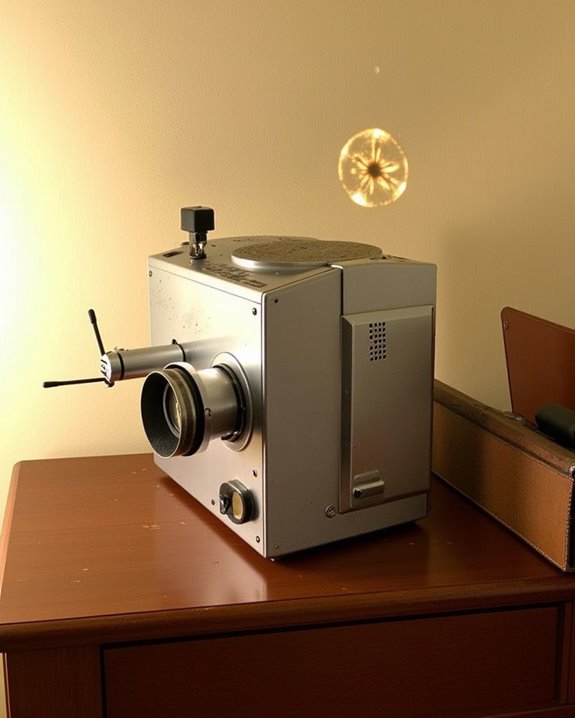

You’ve probably used a modern projector, but have you ever wondered about their origins? The history of projection technology stretches back centuries, beginning with the 17th-century magic lantern that used candlelight and mirrors to display images on walls. Leonardo da Vinci’s camera obscura experiments in the 1500s laid essential groundwork, while the Lumière brothers’ 1895 Cinématographe marked the true birth of modern projection. This fascinating evolution from simple light manipulation to today’s high-definition digital systems reveals how projection technology has transformed entertainment, education, and communication throughout human history.
Key Takeaways
- Early projection technology originated with 17th century magic lanterns using mirrors and light to create optical illusions.
- Leonardo da Vinci’s experiments with camera obscura and optics established foundational principles for future projection development.
- The Lumière brothers revolutionized projection with their Cinématographe in 1895, marking the birth of modern motion picture projection.
- The 1950s-1980s saw educational adoption of filmstrip and overhead projectors, with 95% of classrooms using them by 1985.
- Modern projector development advanced from bulky equipment to portable 4K devices with wireless connectivity and automated adjustment features.
The Magic Lantern: Origins in the 17th Century
The magic lantern’s construction featured a concave mirror, light source, and transparent slides that created optical illusions when projected through a lens. These projections, often depicting ghosts and devils, became popular folklore entertainment for audiences unfamiliar with photographic techniques. People perceived these projections as supernatural or magical, establishing the foundation for visual storytelling that would eventually evolve into cinema. Modern home theater projectors continue this legacy with advanced features like native 1080P resolution to deliver sharp and vibrant images.
Leonardo Da Vinci’s Early Projector Concepts
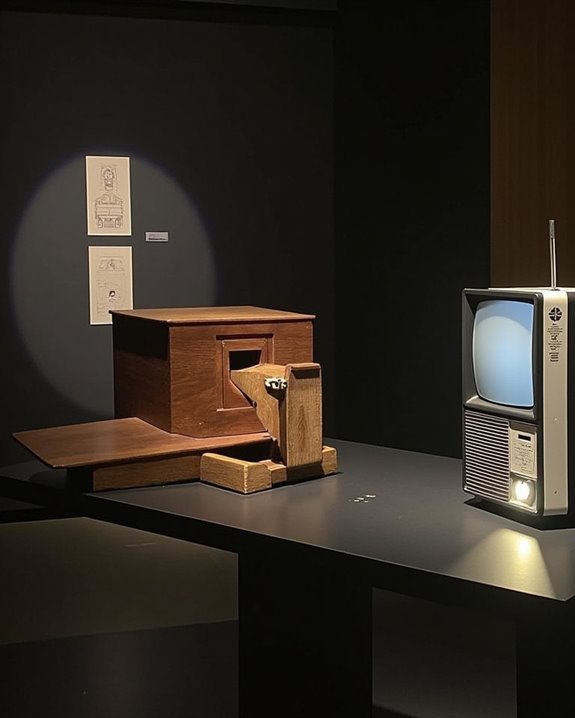
While many people associate projection technology with modern times, Leonardo da Vinci, the renowned Renaissance polymath, was already exploring the fundamental concepts of projectors centuries before they became commonplace. His extensive optical experiments with the camera obscura allowed him to study how light could project images onto surfaces, establishing principles that would later become essential to projection technology.
Da Vinci’s mechanical innovations often combined optical and engineering elements, particularly in his designs for lenses and mirrors that could manipulate light in precise ways. His work with bifocal lenses and reflection demonstrated an understanding of light behavior that was remarkably advanced for his era. Though he didn’t build modern projectors, his theoretical contributions created a foundation upon which later inventors would develop more sophisticated projection systems. Today’s commercial projectors, such as those featuring native 4K resolution, owe their advanced capabilities to centuries of optical research and innovation.
Motion Picture Projection: The Lumière Brothers’ Revolution
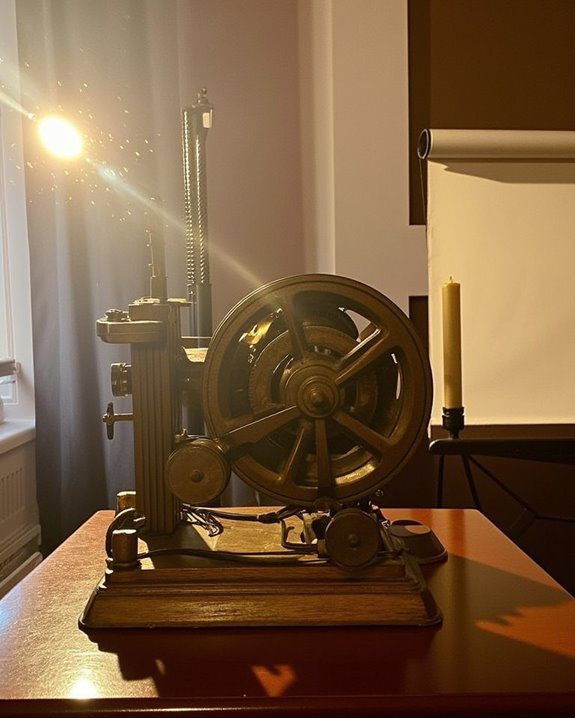
Transforming the landscape of visual entertainment forever, Auguste and Louis Lumière revolutionized projection technology when they patented their groundbreaking Cinématographe on February 13, 1895. This remarkable device combined camera, film processor, and projector functions into one portable unit, making it considerably more practical than previous inventions. The Cinématographe innovation debuted publicly on December 28, 1895, at Paris’s Grand Café, where audiences witnessed moving pictures as a collective experience for the first time.
The Lumière legacy extends beyond their pioneering device, as they created influential short films like “Workers Leaving the Lumière Factory,” establishing early documentary filmmaking techniques. Though they initially viewed their invention as merely a novelty, their work fundamentally shaped cinema’s trajectory. You can trace many modern projection technologies directly to their groundbreaking achievements, which laid the foundation for an entirely new industry and art form. Modern projector advancements now include features like multi-color laser projection and smart controls, vastly enhancing visual experiences.
From Glass to Celluloid: Film Projection Evolution
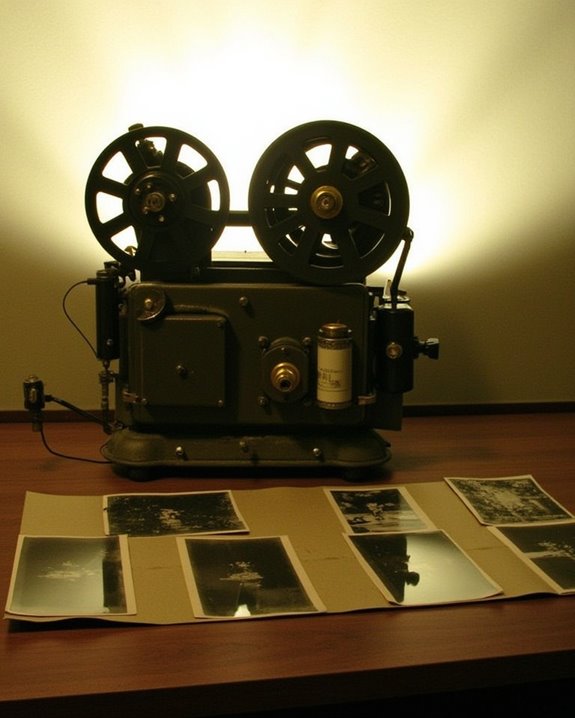
Before celluloid revolutionized projection, you’d find early innovators relying on simple yet ingenious glass-based technologies to create visual spectacles. Magic lanterns, developed in the 17th century, projected images from intricate glass slides using light sources and vintage lenses that required careful projection calibration to achieve clarity. These devices laid the foundation for future projection methods, alongside advances in stereoscopy and stroboscopic animation.
The landscape changed dramatically in 1889 when Kodak introduced celluloid film, quickly replacing glass slides as the primary projection medium. This shift enabled the development of the first true motion picture projectors in the 1890s, transforming entertainment possibilities. Early films were remarkably brief, lasting only about 50 seconds, and lacked synchronized sound or color, but they captivated audiences and established the framework for cinema’s eventual evolution into a dominant art form.
Educational Projectors: Filmstrips and Overhead Models
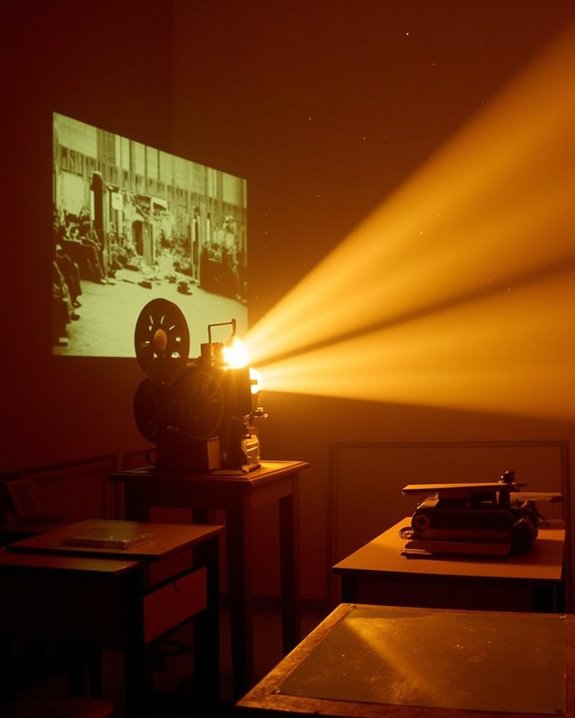
As motion picture technology established its place in entertainment, a parallel evolution was taking place in education, where projection devices would transform how students learned in classrooms across America. Thomas Edison’s prediction that motion pictures would replace textbooks didn’t fully materialize, but filmstrip projectors became classroom staples until the 1980s, allowing teachers to pause presentations for discussions.
Overhead projectors, first used by the U.S. military during WWII, revolutionized classrooms when 3M introduced transparencies in the 1950s. By 1985, over 95% of American classrooms featured these devices, some even battery powered projectors for flexibility. This technology shift, which eventually led to 3D projection capabilities, markedly altered classroom dynamics, creating more visual and interactive learning environments while establishing the foundation for modern educational technology.

✔Standard US Letter Size(9x11.5") for (8.5x11") Paper, 5 Mil Pack of 100

Create. Communicate. Teach. When you need ultra fine point erasable markers for the office or classroom - reach for Staedtler's universal use correctable pen

▶【Perforate Acoustically Sound Transparent】The BELOW BLACK BORDER adds a perforated design, which satisfies the customer's pursuit of stereo effects, and achieves a more stereoscopic effect;The Screen size:100-inch Diagonal:16:9 Aspect Ratio;Standard View Area :87.17”Wx49.02"H;G.W.(Ibs):61.73;Screen Material: ULTRA-SHORT THROW AMBIENT LIGHT REJECTING; Projector Throw Type: ONLY compatible for ULTRA-SHORT THROW LASER PROJECTOR;Offer 110V voltage;Anti-light direction: The light above the screen;
The Digital Transformation of the 1980s
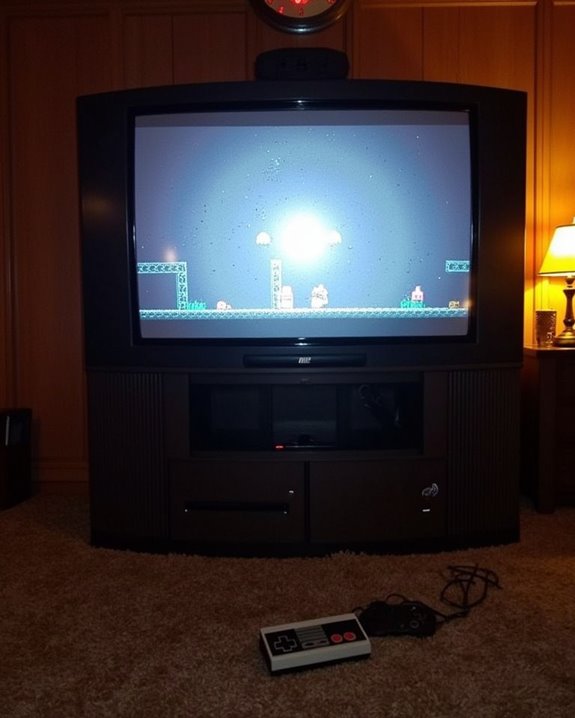
The 1980s marked a pivotal decade in the evolution of projection technology, occurring alongside the broader digital revolution that would forever change how we interact with media and information. During this period, projectors began shifting from purely analog devices to incorporating digital components, mirroring the technological advancements seen in personal computing with the IBM PC and Apple Macintosh.
The introduction of CD technology and improved electronic systems influenced projector development, with manufacturers integrating digital controls and enhanced display capabilities. You’d notice significant improvements in image quality, brightness, and reliability as MOSFET scaling allowed for more compact yet powerful projection systems. These changes paralleled broader shifts in digital entertainment and home computing, setting the foundation for the multimedia projection systems that would emerge in subsequent decades.
Home Theater Revolution: How Projector TVs Changed Entertainment
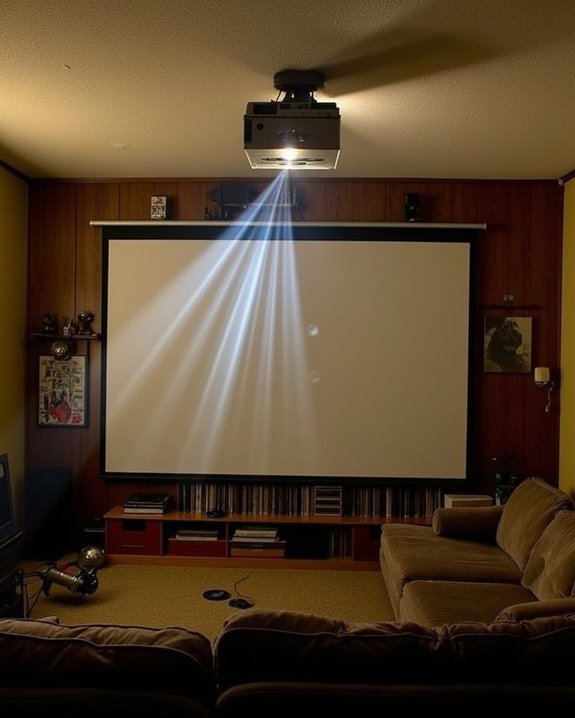
While projector technology had existed for centuries in various forms, the home theater revolution truly began to take shape during the 1980s, transforming how you’d experience entertainment in your living room. Early home theater setups emerged as modern projector and screen combinations became more accessible, offering cinematic experiences without the cinema’s price tag.
Throughout the 1990s, video and computer projectors brought enhanced resolution to homes, making movie nights more immersive than traditional television viewing. By the 2000s, advancements in LCD and DLP technology substantially improved image quality while reducing both the size and price of projectors. Today’s systems incorporate stunning laser projection capabilities that deliver vibrant colors and sharp contrast, with some cutting-edge models even supporting augmented reality features that transform how you interact with projected content.

Wall Mounted Fixed Frame Projection Screen (Overall Size 63.625" Tall x 109.25" Wide) (Viewing Area 120" Diagonal x 58.875" Tall x 104.5" Wide) No option for Legs or Stands with this product. Recommended for projectors with Native 16:9 Resolution

Quick & Simple Solution for Outdoor Projection: Set up in no time with just the included air blower—no need to attach a separate white screen. The one-piece design of the white screen and black frame makes setup easier, perfect for watching movies or sports in your backyard with minimal effort.
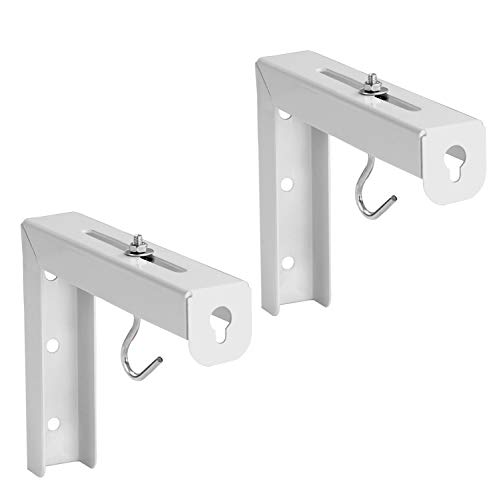
UNIVERSAL L-SHAPED PROJECTION SCREEN BRACKETS: Our projector screen wall mount makes setting up for your next movie or presentation a breeze. Most projector screens do not come with mounting hardware. Our screen mounting brackets are what you need to your hang your screen. Universal hooks are compatible with most hanging projector screens on the market.
Modern Projector Technologies and Future Innovations
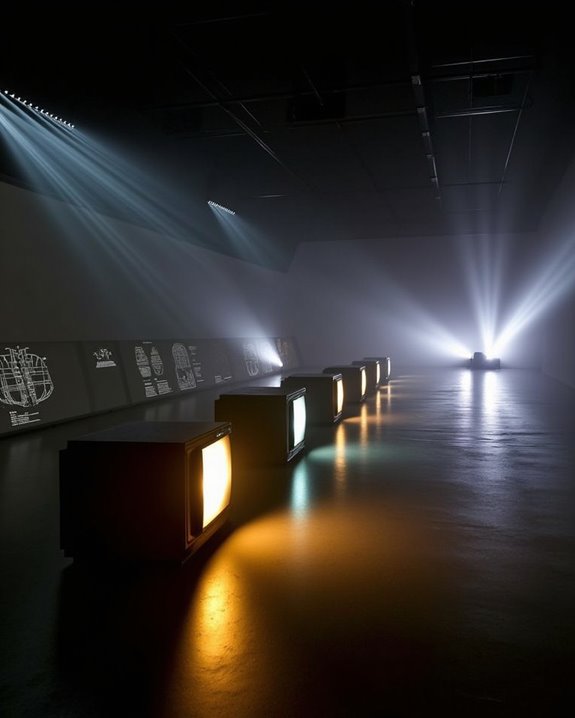
Modern projector technologies have undergone remarkable evolution since their early home theater days, with today’s models offering unprecedented capabilities that couldn’t have been imagined decades ago. Laser breakthroughs have revolutionized brightness and durability, with Samsung’s The Premiere 5 exemplifying how these light sources deliver superior performance in various viewing environments. Portable innovations like the Aurzen ZIP’s tri-fold design have transformed projectors from stationary fixtures into flexible entertainment solutions you can take anywhere.
Today’s projectors feature 4K resolution, automated keystone correction, and wireless connectivity, making setup simpler than ever. The integration of ambient light rejection screens has addressed one of projection’s historical limitations, while motorized options like the XGIMI Ascend combine seamlessly with sound systems for exhaustive home theater experiences.
![4K Portable Smart Projector with WiFi and Bluetooth [Compatible with Netflix & Dolby Audio], Mini Outdoor Movie Projector with Native 1080P, Auto Keystone & Electric Focus for Home Theater, Bedroom](https://m.media-amazon.com/images/I/41ZsqxVUB9L._SL500_.jpg)
[All-in-One Streaming Ready] This projector with wifi and bluetooth provides direct access to streaming platforms like Netflix, YouTube, and Prime Video. Simply connect to your home network and press play—no extra streaming devices needed. Designed for instant enjoyment, the mini projector eliminates compatibility issues and delivers seamless viewing. Perfect for home theater or outdoor movie nights, the smart projector works reliably out of the box and integrates effortlessly into your entertainment routine.
![[5000+ Official-Apps & AI Auto Focus & 50W Dolby Audio] Outdoor-Projector-4k with WiFi and Bluetooth, AI Movin 2.0 OS Smart Projector with HDR10+, Lisowod Portable 4K Proyector 2026 Upgraded](https://m.media-amazon.com/images/I/51aFLjcJwiL._SL500_.jpg)
[Smart Projector with Movin 2.0 OS - New Home Entertainment is Here] Powered by the exclusive AI Movin 2.0 OS and a quad-core A55 processor, the Lisowod L61Pro projector delivers 75% faster app launches and smoother navigation than standard 1080P projectors. Immerse yourself in true 4K decoding with HDR10+ for breathtaking clarity and Hollywood-grade color contrast on massive 300-inch screens. All popular apps are pre-installed for instant entertainment without extra devices. Dual-band WiFi, Bluetooth 5.2, and built-in 50W Dolby stereo speakers provide a seamless, lag-free experience at home or outdoors.
![Mini-Projector with WiFi6 and Two-Way Bluetooth5.4, 1080P 4K Support, [Built-in Apps & 2026 Android 13] Portable Outdoor Movie Proyector for Bedroom, Auto Keystone & 270° Rotation for Phone/HDMI/USB](https://m.media-amazon.com/images/I/41IKBUYbO1L._SL500_.jpg)
【2026 Upgraded Smart Android 13 OS – 8,000+ Apps Built-In】The TOPTRO mini projector features the latest Android 13 OS, powered by 1GB RAM and 8GB storage for smooth, responsive performance. This smart projector comes pre-installed with Android TV, giving you instant access to 8,000+ official apps—including Prime Video, YouTube, and Hulu—right out of the box, no extra devices needed; Simply connect to Wi-Fi and start watching. Personalize your home screen with custom wallpapers and enjoy a true all-in-one cinema experience. 🚩Note: Regular OTA updates keep your system optimized and expand app compatibility. Now upgraded to Android 13—easily update via Wi-Fi
Frequently Asked Questions
How Much Did the First Commercial Projectors Cost?
You’re looking at thousands of dollars for the first commercial projectors in the 1890s. With inflation impact, the cost comparison to today would be astronomical—they were exclusively business investments, not consumer products.
Who Invented the First Portable Battery-Powered Projector?
While no single inventor is definitively credited, you’ll find that portable projectors emerged in the early 2000s when advances in battery technology and miniaturization finally made lightweight, battery-powered projection devices commercially viable for consumers.
When Did Projectors First Become Commonplace in Homes?
You’d find projectors becoming commonplace in homes during the early 2000s, when affordability improved and they became popular for home installation and decorative displays beyond just movie viewing experiences.
How Did Projection Technology Evolve Differently in Eastern Versus Western Countries?
Like parallel rivers flowing at different speeds, you’ll notice eastern cultures pioneered early projection concepts, while western nations led modern technological innovation. These cultural differences gradually converged through increased global collaboration in recent decades.
What Was the Environmental Impact of Early Projection Technologies?
You’ll find early projectors were serious environmental offenders. They caused environmental pollution through high energy consumption and heat generation, while contributing to resource depletion with their wasteful manufacturing processes and frequent lamp replacements.